Pump the Brakes on Tanker Truck Downtime
Siouxland Trailer Helps Tanker Trucks Pump the Brakes on Downtime
For tanker trailer operators, time is money. When a trailer can’t unload its product because of a failed pump seal, the truck goes in for service, schedules slip, customers wait, and operators feel the impact like a traffic jam backing up a busy highway. What should be a smooth delivery can quickly turn into a costly sequence of events.
Across the Midwestern United States, tanker fleets haul agricultural liquids such as corn syrup, corn oil, and ethanol as well as other food-grade products to processors and manufacturers. These loads must be handled efficiently, hygienically, and without interruption. When the pump on the trailer fails, the ripple effects are costly.
Siouxland Trailer has spent nearly three decades helping customers avoid those problems. Operating three locations along the I-29 corridor in Iowa and South Dakota, the company sells and services tanker trailers used throughout the agriculture and food industries. Much of its business centers on the transportation of liquid agricultural products and food-grade products.
The pumps installed on those trailers make all the difference in reliability and uptime.
Watch Unibloc At Work At Siouxland
When pumps leak, everything stops
Many tanker trailers rely on pumps designed decades ago. While these pumps are widely used across the industry, their designs often require frequent maintenance and soft part rebuilds.
Seals are the most common reliability issue. Commonly used pumps rely on simple o-rings made of Buna® (nitrile) material. But drivers regularly run pumps dry during unloading operations, building up heat that destroys the seals. Wil Niemeier, Territory Sales Representative – South at Siouxland Trailer, described the issue clearly:
"Those pumps in the food industry have always been sealed by nothing but Buna o-rings. Anytime you run those dry, you’re just rubbing against a Buna o-ring, and we were seeing a lot of guys having to rebuild."
For operators hauling food-grade materials, a pump leak is more than a maintenance inconvenience. If a facility does not have its own pumping system, it relies on the truck pump. Niemeier said, "If the driver has a catastrophic leak at his pump, now he’s got to shut his valving, clean his piping, go have the pump repaired, and then offload."
Failed seals waste valuable product and often require a second truck to complete the delivery. Add to this the service center’s cost and the downtime while the seals are replaced, from four hours to two days. A single seal failure on a trailer full of product can cost operators from $1500 to $5000 per day.
The search for a better pump
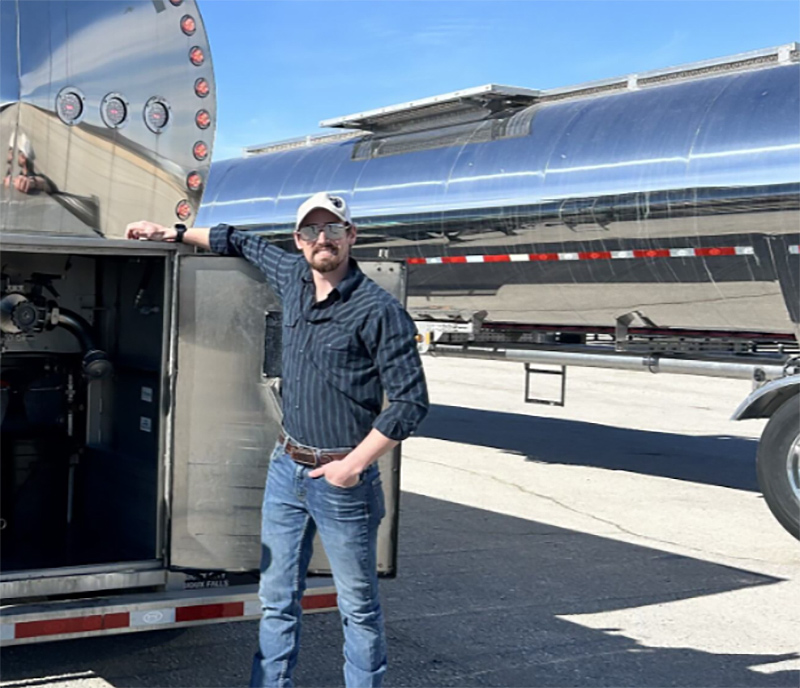
Niemeier and the Siouxland team repeatedly encountered these problems and began looking for a better pump to offer. Their customers needed pumps that could handle demanding unloading conditions without constant rebuilds.
Niemeier’s search led him to Unibloc® lobe pumps from Unibloc Hygienic Technologies. They featured design innovations he hoped would help his customers. Niemeier decided to test the pump in the toughest application he could find.
He told himself, "If I’m going to put my eggs in this Unibloc basket, I’m going to throw one into the dirtiest, nastiest service I can find."
One customer had a reputation for pushing pumps to their limits. Niemeier knew they were replacing pumps "left and right." If the Unibloc pump could survive in that environment, Niemeier knew it could succeed anywhere.
The results were dramatic. "I sold them one pump. They didn’t have to put a seal in it for six months." Since that time, the customer has purchased 50 Unibloc pumps for its fleet."
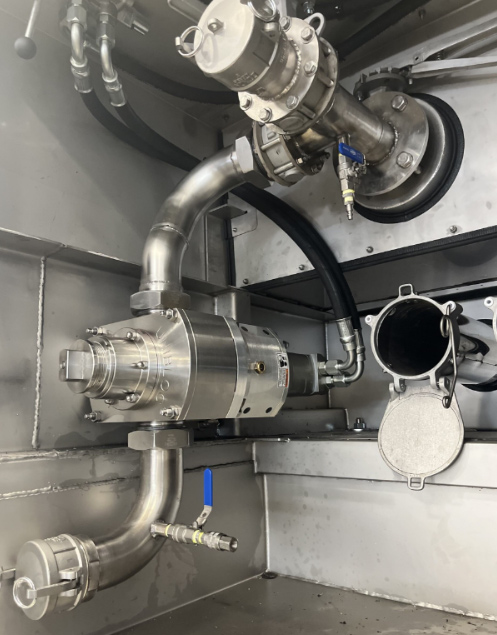
Unlike competitive pumps, the Unibloc FF551 FoodFirst® lobe pump features double- or triple-o-lip seals made of a Teflon-stainless composite. They stand up to the heat, eliminating the No. 1 root cause of seal failures in tanker truck trailers. In addition, the pump’s unique design supports the rotor at both ends of the shaft, preventing leaks caused by a flexing shaft wearing the seal unevenly.
Niemeier quickly recognized the difference. "The Unibloc pump with its triple lip design—it just outperformed," he said.
For Niemeier, it was a eureka moment. Like wheels on luggage, once you see the solution, you wonder why people put up with the problem so long.
Built for reliability and hygienic performance
Reliability was only part of the story. In the food-grade transportation industry, preventing contamination is equally important.
Every pump component must be easy to clean and designed to minimize the risk of foreign material entering the product stream. Equipment that is difficult to maintain or contains many small components can increase the risk of contamination during service.
The Unibloc QuickStrip® FoodFirst design addressed these concerns with fewer parts and a simplified design that minimizes places where contaminants could collect. In addition, the pump housing and rotors were milled from single billets of stainless-steel, eliminating weld transitions that could harbor bacteria.
Niemeier appreciated the simplicity. "The FoodFirst design is easier to clean. You have fewer loose parts, fewer parts to lose, fewer nooks and crannies where bad things can congregate."
Another major advantage is the elimination of rotor bolts. In conventional pumps, these bolts must be removed during cleaning and maintenance, which introduces opportunities for pump damage.
The crews at cleaning stations frequently mis-torque rotor bolts, which may crush the sleeves and put the rotor out of alignment. This can cause the rotor to wear against the housing, causing scratches that require re-machining of the housing or pump replacement.
"Those rotor bolts—do they get lost? Do they get dropped in a drain? Do they get, God forbid, left inside of a pump housing? Those can all lead to catastrophic failure," he said.
The Unibloc FoodFirst pump, with its patented bolt-free rotor design, eliminated a common source of pump damage.
Pumping the brakes on downtime
For tanker fleets, downtime translates directly into lost revenue. Even a small percentage of trailers requiring frequent pump repairs can create significant operational costs.
For companies operating tanker trucks, choosing the right pump for the trailers is more than a specification decision. It is a decision that directly affects operational efficiency and long-term costs.
The innovative pump has proven to keep Siouxland Trailer customers and their trailers moving. Niemeier said, "If I get them to try it, they don’t look back."