Sight Glasses
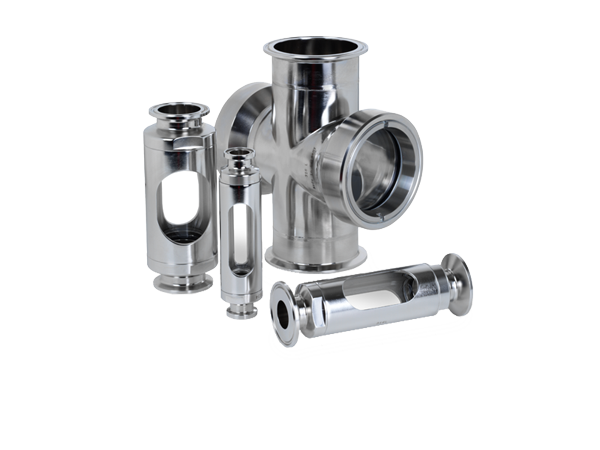
Sanitary sight glasses, available in various sizes, glass materials and pressure ranges, give you extra efficiency and protection while supervising your active process.
Hygenitec™
Sanitary sight glasses, available in various sizes, glass materials and pressure ranges, give you extra efficiency and protection while supervising your active process.
WHAT IS A SIGHT GLASS?
A sight glass is simply a transparent window or tube installed within a tank or boiler system that allows an observer to study the contents inside, ensuring optimal quality and safety. For monitoring liquids and ensuring optimal safety in processes that involve pressurized systems or vaporization, sight glass windows are used to some extent.
A sight glass from Unibloc is designed for precision and accuracy, which is why it’s used in industries like food and beverage, personal care, and pharmaceuticals. Companies count on our rigorous testing and quality control to deliver sight glass that ensures safety and stellar performance every time.


From the Blog
View BlogCIP vs. COP: Which Sanitation Method Works Best for Your Pump Technology?
Understand the difference between clean-in-place and clean-out-of-place pump sanitation— and why it matters for your bottom line.
Read Blog6 Reasons to Consider an AODD Pump for Your Hygienic Process
Sometimes pump performance problems do not start at the pump. Rather, they start at the spec sheet, with the wrong pump picked for the job or the right pump set up the wrong way. In a recent webinar, Caleb Summers, Lead Application Engineer at Unibloc® Hygienic Technologies, discussed where air-operated double-diaphragm (AODD) pumps perform best in a hygienic process and what newer pump designs have changed about the conversation. Here are six reasons to consider one for your application.
Read BlogPreventing Cavitation in Hygienic Pumps
A cavitating pump tells you it is failing before the maintenance log does. The sound is unmistakable; the damage compounds quickly, and on a hygienic processing line, the consequences extend beyond the pump itself.
Read BlogUpcoming Events